School Construction Progress (with Related Video)
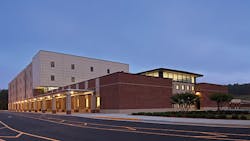
Four years ago, as U.S. economic conditions were deteriorating, the Clark County (Nev.) district, for decades one of the nation's fastest-growing school systems, scrapped a scheduled $7 billion bond election that would have paid for more than 70 new schools. The yearly enrollment increases Clark County had been experiencing — typically 10,000 or more — had evaporated. The economic collapse in 2008 made it clear that the district wouldn't need so many new schools, and county voters were unlikely to approve such a massive expenditure.
For most schools and universities across the nation, the word "billion" doesn't enter into discussions of facility needs. But like Clark County, many education institutions have had to apply the brakes in the last four years to construction plans for their campuses. Many districts that need voter approval for capital projects made the judgment that the climate was not right to seek a tax increase; schools and colleges that rely on state funding saw legislatures tighten their purse strings or even slash spending on education; institutions hoping that fund raising would bail them out saw endowments shrink and donations ebb.
But school facility needs can't always wait for a thriving economy. Many education institutions have to provide additional space to accommodate increased enrollment or new programs, and even at schools and universities where the student population is stagnant or declining, some facilities are aging and outdated — as the cost of renovating or replacing them grows every year.
Even with the economic troubles that make acquiring construction funds an uphill battle, many education institutions have stepped forward with efforts to address their building needs.
Trying again
In 2012, the Clark County district no longer was looking at building dozens of new campuses to accommodate growth — its enrollment for 2011-12 of about 308,000 was about the same as the figure in 2007-08. Still, the massive district had identified that it would have $5.3 billion in facility needs over the next 10 years. Only about $216 million of that would be allocated for new schools, and more than $3.4 billion would be allocated for renovating and replacing existing facilities.
Asking voters to authorize the entire $5.3 billion in a 2012 bond issue was not feasible. Because of sizable decreases in property valuation in the Las Vegas area and borrowing limits imposed on the district, the Clark County board had to look at shorter-term answers. It has decided to place a request for a tax increase on the November ballot that would raise $669 million over six years.
Instead of seeking voter authorization to borrow money by issuing bonds, the district is asking constituents to approve a pay-as-you-go tax that would enable the school system to begin tackling some of its building needs. The district described the short-term tax request as a bridge that would deal with the district's highest-priority needs.
Among the projects that would be addressed with the "bridge" funding: major modernization of 19 schools; replacement of HVAC systems at seven middle schools; construction of two elementary schools to address crowding; and replacement of two aging elementary campuses.
By 2018, when the tax would expire, Clark County expects to have the borrowing capacity to be able to seek a bond issue to cover the remaining $4.7 billion in district facility needs.
Catching up in Katy
In some districts, enrollment has continued to rise despite the recession. In the Katy (Texas) district near Houston, student enrollment growth has slowed compared with the early 2000s, but still is greater than most districts. From 2001 to 2007, the district's student population grew an average of 2,400 students each year; from 2007 to 2011, the average growth was 1,900 students.
That growth is projected to continue for at least another decade, according to the district's demographic studies. The student population, at about 62,000 in 2011, is expected to reach 72,581 in 2016 and 85,901 in 2021, under a moderate growth scenario. (Under a high-growth scenario, the district would reach 76,441 in 2016 and 92,157 in 2021.)
Katy officials had anticipated having a bond election in 2009 (its previous proposal was in 2006), but postponed plans because of the poor economy and the slower rate of growth.
But by 2010, the growth that had occurred and that was projected to occur in the Katy district was significant enough to persuade the school board to put a $460 million bond proposal on the November ballot. The request was approved with support of about 52 percent of voters, and the first facilities paid for with the bond funds are scheduled to be opened this summer.
Three elementary schools — Wilson, Wolman and Shafer — will be completed in July. Each cost about $23 million and was built using the same prototype design to accommodate about 1,030 students. Seven Lakes Junior High School, a $39.8 million campus with a 1,400-student capacity, also will open this summer.
In 2013, construction of a $137 million high school campus is expected to be completed, the district says.
Getting up to date
The San Francisco district reports that its enrollment now is growing slightly, but for most of the last 25 years, student numbers have been declining. So the emphasis in the 2000s has been on maintaining and renovating the school system's aging facilities. Voters approved phase one of the renovation plan in 2003 — a $295 million bond proposal that enabled the district to modernize 32 facilities. In 2006, a $450 million plan won voter approval that supplied funds to carry out 64 building modernizations.
That left more than 50 facilities that had not received needed upgrades, so the district pursued phase three of the renovations through a $531 million bond proposal on the November 2011 ballot.
"San Francisco schools serve nearly 60,000 students in some of the oldest buildings in the state," bond proponents asserted in the voter information packet prior to the election. "Many of these buildings desperately need to be modernized to 21st century safety code and accessibility standards."
Voters authorized the bond issue with a 71 percent majority. The modernization work will repair deteriorating restrooms and leaky roofs; replace outdated electrical systems; carry out seismic retrofits for earthquake safety; update fire alarms and sprinkler systems; improve access for students with disabilities; and modernize classrooms and install technology infrastructure.
Protecting an investment
The Fairfax County (Va.) district, with a student enrollment edging toward 180,000, estimates that its school buildings and other facilities have a combined value of about $6.1 billion. In deciding to pursue a $253 million bond election in November 2011, district officials say the renovations those bonds would pay for were necessary to protect the community's investment in school facilities.
"Not only do these facilities wear out over time, but they also become outdated, both technologically and instructionally," bond proponents argued in their campaign literature. "Fairfax County public schools are expected to be usable for 20 to 25 years from the date of construction. Renovations undertaken at the end of that period extend the useful life of the school building another 20 years."
About 70 percent of those voting supported the bond referendum. Along with $29 million in savings from previous bond issues, the district will spend $280 million on improvements. The projects covered:
- Elementary school renovations: $97.7 million. That includes construction at six campuses, and planning at eight campuses.
- Middle school renovations: $46.5 million. That includes construction at one campus, and planning at one.
- High school renovations: $96.2 million. That includes construction at one campus and planning at two campuses.
- Additions: $13.7 million. Three elementary schools will receive additions, and some modular classrooms will be relocated.
Bond funds also are allocated to HVAC and roof replacements, security improvements and technology upgrades.
Sales taxes
An obstacle for many school systems to overcome in pursuing funding for construction is the opposition of voters who refuse to add more to what they already feel is an excessive property tax levy. In places such as Georgia that allow districts to levy a sales tax for school construction, capital expenditure referendums may have better prospects.
The Gwinnett County (Ga.) district, with more than 162,000 students in the suburbs of Atlanta, has been growing steadily for decades, and for 15 years has been relying on the Special Purpose Local Option Sales Tax, or SPLOST, to pay for the construction needed to accommodate the continuing influx of students. SPLOST, a 1-cent sales tax, must be authorized by voters every five years.
Between 2006, when voters renewed the tax, and 2011, when it was due to return to the ballot, the nation's economic fortunes plummeted, making reauthorization a more difficult challenge. However, more than 60 percent of the county's voters agreed to support SPLOST IV and continue the tax, which is projected to provide the district with $859 million from 2012 to 2017.
The revenue will enable Gwinnett County to build five new schools — one high, two middle and two elementary. Three high, two middle and three elementary schools will receive classroom additions. One existing school will be renovated. Technology will be installed or upgraded in 138 new or existing schools.
All middle and high school gyms and elementary activity buildings will receive air conditioning, as will any school kitchens that don't have air conditioning. The district also will use funds to try to catch up on deferred maintenance projects.
Kennedy, staff writer, can be reached at [email protected].
Related video
The following video is about the University of Texas San Marcos's growth:
Sidebars
Sidebar: An expanding campus
Texas State University in San Marcos, with about 34,000 students, has numerous construction projects underway to provide new and upgraded facilities on campus.
A university report from earlier this year listed about $300 million in construction projects, including:
- Performing Arts Complex: $83.2 million. The complex will have a 300-seat recital hall and a 400-seat theater. The project also includes a 455-car parking garage and a chiller plant.
- Undergraduate Academic Center: $47.7 million. The 130,000-square-foot facility, which will house the political science, psychology and sociology departments, is scheduled to open later this year.
- North Campus Housing Complex: $46.1 million. A 612-bed facility will enable the university to demolish existing student housing to make space for construction of academic facilities.
- Bobcat Stadium, North Side Complex: $33 million. This will provide additional seating, concession space, restrooms, locker rooms, storage, display and retail space.
- Electrical Infrastructure upgrades: $11.8 million.
- Commons Dining Hall renovation: $7.2 million.
- Brogdon Hall renovations: $7 million. The residence hall is receiving roof and window replacements, and heating and cooling upgrades.
- Center for Research Commercialization: $6.9 million. Construction of the facility, which will serve as a technology accelerator for start-up businesses, is scheduled to be completed later this year.
- Lampasas Hall renovation: $3.3 million. Work on the academic building will include infrastructure upgrades, and installation of furniture and equipment to accommodate new faculty offices.
- Housing and Residential Life Building: $2.2 million. Construction is expected to be completed later this year.
Sidebar: Donor Driven
Education construction projects, especially in higher education, often are heavily underwritten by generous donations from alumni or other philanthropists.
That is the case for Cornell University's planned $2 billion applied sciences and technology campus on Roosevelt Island in New York City. The university is partnering with The Technion – Israel Institute of Technology on the project. The program will be known as Technion Cornell Innovation Institute and will offer graduate and doctoral programs.
Key to the construction plans is a $350 million gift from Atlantic Philanthropies. The founding chairman of Atlantic Philanthropies is Feeney, an alumnus of Cornell. The land for the 2.1 million-square-foot campus is being provided by New York City, which also has promised $100 million in infrastructure upgrades.
Demolition of existing buildings on Roosevelt Island is expected to commence in 2014, and the first campus buildings are expected to open in 2017. Cornell is expected to begin the program in leased space in New York City in September 2012.
About the Author
Mike Kennedy
Senior Editor
Mike Kennedy, senior editor, has written for AS&U on a wide range of educational issues since 1999.