Bed Bug Education for School Maintenance (with Related Video)
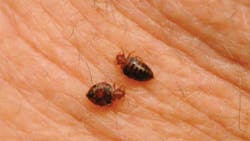
Bed bugs are a growing problem, not only in homes and hotels, but also in schools and colleges. Facility administrators and staff need to understand the bed bug resurgence and develop best practices to deal with an infestation.
Today's bed bugs
The 2011 "Bugs Without Borders" survey of U.S. pest professionals, conducted by the National Pest Management Association and the University of Kentucky, found that bed bug encounters in non-residential settings had increased significantly from the previous year. A majority of pest professionals — 54 percent — said they encountered bed bugs in college residence halls in 2011 compared with 35 percent in 2010. Similarly, 36 percent said they encountered bed bugs in schools and daycare centers in 2011, compared with 10 percent the previous year.
Bed bugs, although no longer front-page news, still are a prevalent problem in America. Because of the bugs' hitchhiking nature, schools and universities easily may become infested — perhaps students or staff have an infestation at home and unknowingly bring the pests to school; in the case of college students, they may bring them back to school after traveling. In schools and universities, the locations of bed bugs can be unpredictable — from residence halls, to classrooms, to cafeterias and even offices — and can be difficult to control.
Adult bed bugs resemble a flat apple seed, while hatchlings are so small they can pass through a stitch-hole in a mattress. These pests feed on human blood and are found wherever people are, often hiding in spots humans can't see and coming out to feed only when an opportunity arises. What makes these pests especially problematic is that they are elusive and breed quickly. A female bed bug can lay one to five eggs in a day and more than 500 in a lifetime.
Bed bugs are transported easily from one place to another. They hide in suitcases, boxes and shoes to be near a food supply. They like to hide in small cracks and crevices close to a human environment. Bed bugs most often are found in bed parts, such as mattresses, box springs and headboards.
They also can conceal themselves behind baseboards, wallpaper, upholstery, picture frames, electrical switchplates and in furniture crevices.
Because the presence of bed bugs may generate anxiety among students, parents and staff, administrators should develop a protocol to effectively deal with an infestation.
Responding to an infestation
Recently a large university in the Midwest experienced a bed bug infestation and the consequences of not handling the problem properly. According to the university newspaper, reports of bed bug problems spread across campus through word of mouth and through articles in the publication. A resident adviser even told the media that she informed the university's housing administration that she had bed bugs and alleged that she was told not to inform her floor about the problem.
The university eventually used bed bug-sniffing dogs to search all the rooms and treated nearly 200 for bed bugs. Additionally, the school established a website providing bed bug information, prevention and detection tips and daily updates about the bed bug issue on campus.
This case illustrates how a bed bug situation may get out of hand quickly and cause an image problem for a school. Although the university took the right steps in the end, they would have benefitted from a proactive plan and open communication.
Dealing with an outbreak
One of the best ways to begin dealing with a suspected bed bug infestation is to encourage staff and students to report bed bug sightings or bed bug infestations as soon as possible. By sounding the alarm early, a school can bring in pest-management professionals to assess the situation and recommend the next steps.
Because of the prevalence of bed bugs in school and university environments, administrators are encouraged to develop a written bed bug action plan so they are prepared to respond to problems as they arise. The plan should educate staff, teachers and students on the following: basic bed bug biology and habits, especially their hitchhiking nature, which enables them to easily go from home or hotel to school and residence halls; how to recognize bed bugs, their evidence and their bites; the responsibility and roles regarding bed bugs and school response; and actions to reduce the risk of future infestations or incidents.
Guidelines for response
The National Pest Management Association has developed guidelines for responding to a possible bed bug incident:
-
If the bugs are discovered in a residence hall, do not try to hide the problem from residents. In a close living environment, the infestation may have gone beyond one room, and transparency is best.
-
If bed bugs are found in one residence hall room, adjacent rooms and those below and above the infested rooms should be inspected immediately.
-
If bed bugs are found, do not overreact. Typically, one or a few bed bugs can hitchhike into the school on clothing, book bags and other possessions, then look for a host or another hiding place. A breeding infestation of bed bugs in a classroom is rare.
-
Avoid blaming or stigmatizing the students whom you suspect brought the bed bugs to school or in whose room they first were discovered. Discreetly remove those students from the classroom or hall, and perform further checks for bed bugs in their clothes or possessions.
-
If possible, get a specimen so a pest-management professional can verify whether it is a bed bug.
-
Arrange for an inspection by a pest professional experienced in bed bug control (if not already under contract). Document exactly where the problem was discovered. The pest professional may use a certified bed bug scent-detection canine team to aid in their inspection.
-
If a bed bug infestation is confirmed, disclose it to parents, students, staff and others who may have been near the affected area or may be affected.
-
Talk with the pest-management professional about the variety of treatments available to be consistent with school IPM guidelines and regulations.
-
Prepare staff and students for the possibility of several courses of treatment over a period of several months, as bed bug infestations often take several treatments and periodic checks to ensure the problem has been eliminated.
Preventing Future Infestations
Preventing bed bug infestations from occurring again in a school or university setting may be difficult, but education and vigilance on part of administrators, staff, students and parents can go a long way in minimizing problems:
-
Recognize that staff and students may live in infested homes or that students returning to school from travel may unknowingly bring pests in their luggage. Establish a permanent inspection and monitoring program to identify new bed bug introductions before they spread; this includes but is not limited to common living/gathering areas, regular residence hall rooms, classrooms, lockers and even school bus checks.
-
Consider arranging periodic inspections by a pest-management professional to check areas where bed bugs previously have been found, as well as others that may harbor the pests.
-
Provide bed bug information to all parents, including the importance of eliminating bed bugs at home, and guidance on how to avoid bringing the bugs to school.
-
Encourage students who live in residence halls to reduce clutter in their rooms. Also, encourage students who come back from trips to inspect luggage outside prior to bringing it inside the hall.
-
Inspect halls thoroughly after students have left for the summer and rooms and beds are empty and bare.
-
Discourage students from bringing secondhand furniture into residence halls; bed bugs often have been found in old couches and chairs. If students bring in old furniture, educate them about the importance of thoroughly checking the furniture before bringing it inside.
Bed bugs are one of the most difficult pests to control, but it is possible to stem infestations with proper education, vigilance and understanding on behalf of school and university administrators, staff and students as well as in partnership with an experienced and licensed pest-management professional.
Henriksen is vice president of public affairs for the National Pest Management Association (NPMA), Fairfax, Va., a non-profit organization established to support the pest-management industry's commitment to the protection of public health, food and property.
Related Video
View a related video about protecting yourself from bed bugs.